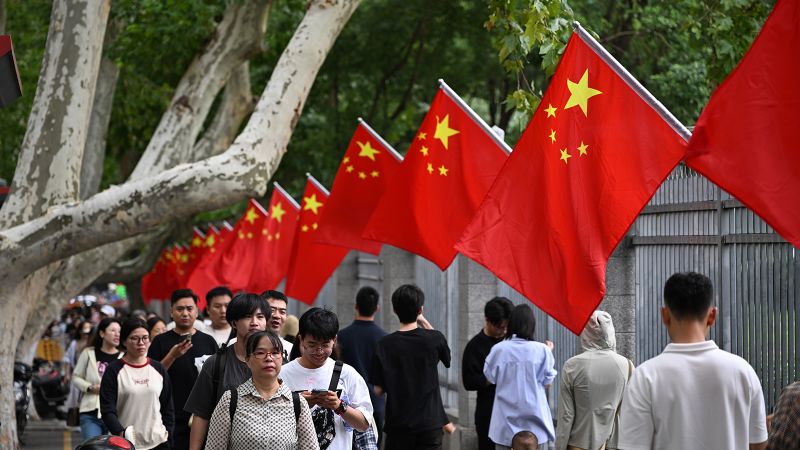
For much of the past year since China reopened to the world following the Covid-19 pandemic, a pall has hung over large swathes of the country as its economy struggles to regain momentum.
The text uses biased language to portray China's economic situation in a negative light, such as describing the country as being in a 'garbage time of history.'
The text selectively reports on negative economic indicators and challenges faced by Chinese society without providing a balanced view of potential positive aspects.
The text misdirects the reader's attention by focusing on the challenges faced by Chinese society without providing a comprehensive analysis of the country's economic situation.
The text stereotypes Chinese people as struggling economically and feeling pessimistic about their country's future.
The text creates fear by highlighting the economic struggles faced by various groups in China, such as young professionals, entrepreneurs, and middle-class families.
The text appeals to emotions by describing the challenges faced by Chinese households, such as massive wealth loss and economic downturn.
The text frames China's economic situation as dire and in need of urgent government intervention.
The text cherry-picks data to emphasize the negative aspects of China's economy, such as highlighting the decline in the housing market and high youth unemployment rate.
The text presents a false balance by portraying the Chinese government's efforts to stimulate the economy as potentially ineffective and lacking effective solutions.
The text uses sensational headlines to attract readers' attention, such as 'China is trying to rescue its property market. Prices are still plunging.'